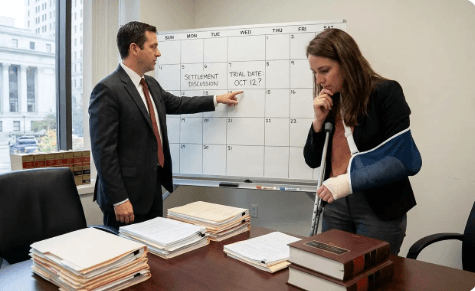
A serious injury claim turns on evidence, damages, and the defendant’s legal responsibility. When negotiations stall, a firm’s ability to present a case at trial can change how insurers assess risk. A trial record shows how counsel investigates disputed facts, prepares witnesses, and proves losses in court. It does not guarantee a particular result. Understanding how trial readiness affects settlement strategy helps injured people evaluate representation and protect a claim’s value.
Keep public reporting separate from case evidence
Crime statistics can highlight community issues, but overall rates do not determine liability in individual injury cases. Reports on local crime may provide context but should not be conflated with legal responsibility. Brian White and Associates focuses on each case individually to get the best possible outcomes. Establishing liability relies on detailed incident records, witness testimonies, and relevant legal standards.
Why trial readiness matters
An adjuster evaluates a claim by weighing its potential exposure against the cost and uncertainty of continuing the dispute. A lawyer who prepares every case for trial can support a demand with organized proof, clear damage calculations, and testimony that withstands scrutiny. That preparation gives the insurer a concrete basis to assess what a jury could award.
Trial readiness also shapes how the parties negotiate. If the insurer disputes fault or questions the extent of an injury, counsel must explain how the evidence answers those objections. A documented litigation plan can narrow disagreements, reveal weak assumptions, and help both sides evaluate settlement terms against the likely trial issues.
Build proof before making demands
A thorough investigation starts with the events that caused the injury. Counsel gathers incident reports, photographs, video, physical evidence, and witness statements before records disappear or memories fade. In a vehicle collision, for example, scene details and vehicle damage may help test competing accounts of speed, position, or impact.
Medical records connect the incident to treatment and describe the injury’s course. Counsel reviews dates, diagnoses, referrals, and restrictions for gaps or inconsistencies that an insurer could raise. The injured person’s account matters, too, but it should match the available records and explain changes in symptoms or daily function.
Calculate the full loss
A payout should account for documented losses, not just the first medical bills. Economic damages can include reasonable treatment costs, lost income, and future care supported by medical evidence. A careful calculation separates amounts already incurred from expenses that remain uncertain, so the demand does not present estimates as settled facts.
Non-economic damages address pain, limitations, and effects on daily life. Specific evidence makes those effects easier to assess: treatment notes, work restrictions, activity changes, and consistent descriptions of ordinary tasks that became difficult. Counsel should connect each claimed impact to the injury and avoid unsupported totals that weaken the presentation.
Negotiate with trial in view
A settlement demand works best when it identifies the legal basis for liability, summarizes the supporting evidence, and explains each category of loss. Counsel can then respond directly to an insurer’s questions about fault, treatment, or the amount requested. A focused response is more useful than repeating a number without addressing the stated objection.
If the insurer refuses a reasonable resolution, filing suit starts formal procedures for exchanging evidence and questioning witnesses. The case may still settle, but preparation continues through motions, expert review, and trial planning. Each step should serve the case, not create activity for its own sake.
Assess the firm’s approach
People comparing injury counsel can ask who will handle the investigation, how the firm evaluates damages, and what happens if negotiations fail. They can also ask about relevant trial experience and how the lawyer explains case risks. Clear answers should describe a process, not promise a fixed award or a quick settlement.
A trial record has value when it reflects preparation relevant to the facts at hand. Past verdicts do not predict a new case’s result, because evidence, law, and injuries differ. The useful question is whether counsel can explain how the record, strategy, and resources apply to the specific claim.
Conclusion
A full payout depends on proving responsibility and documenting the injury’s financial and personal effects. Trial preparation gives counsel a disciplined way to test evidence, answer insurer objections, and assess whether a proposed settlement fairly accounts for the losses. Before accepting an offer, an injured person should request a written breakdown of damages and ask how disputed items are supported. That concrete review can reveal what the offer covers and what remains unresolved.