

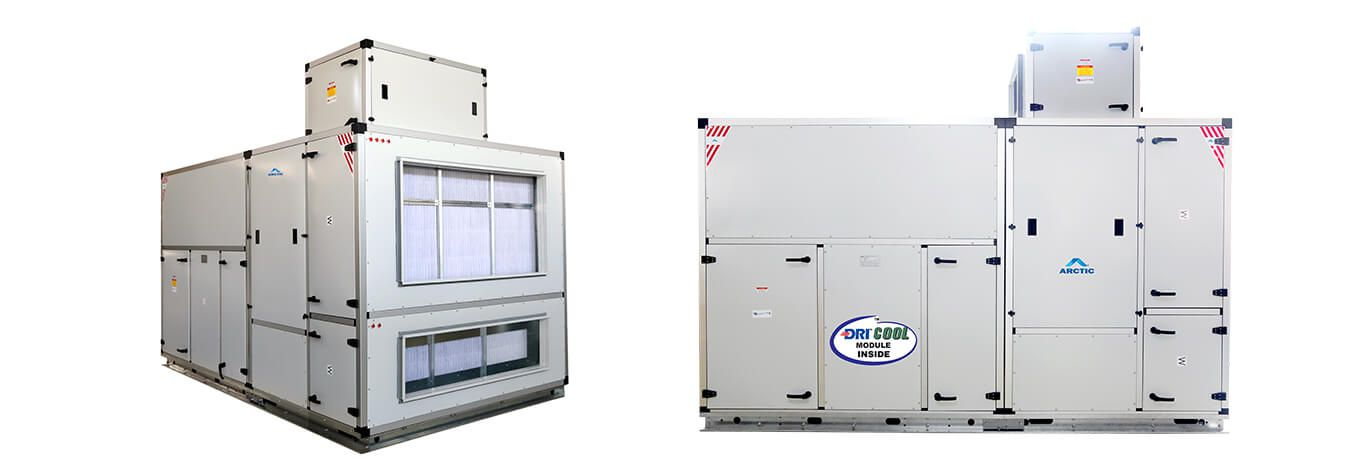
Large industrial facilities and warehouses often face significant heat management challenges. High ceilings, expansive floor areas, equipment-generated heat, and continuous operations can make temperature control difficult. Excessive indoor temperatures can affect operational efficiency, employee comfort, and overall facility performance. As energy costs continue to rise, businesses are increasingly searching for cooling technologies that deliver effective temperature control without excessive energy consumption.
Modern warehouse cooling solutions are designed to address these challenges while improving energy efficiency. Among the available technologies, indirect-direct evaporative cooling systems have emerged as one of the most effective options for large industrial environments. These systems provide reliable cooling, improved ventilation, and lower operating costs compared to many conventional approaches.
Explore advanced warehouse cooling solutions designed to improve temperature control and energy efficiency in large industrial facilities.
Why Is Warehouse Cooling Important for Large Industrial Facilities?
Temperature management plays a critical role in maintaining efficient warehouse operations. Large industrial spaces often experience heat accumulation due to equipment, lighting systems, outdoor weather conditions, and continuous activity. Without proper cooling strategies, indoor temperatures can become difficult to manage.
Effective cooling solutions help maintain a comfortable and productive environment while protecting equipment and stored materials. Proper temperature control can also improve air circulation and support overall operational stability. As facilities continue to expand in size, the demand for efficient cooling technologies becomes increasingly important.
Common reasons why warehouse cooling is essential include:
- Improved workplace comfort
- Better operational efficiency
- Enhanced equipment performance
- Consistent indoor temperatures
- Reduced heat-related disruptions
What Are Warehouse Cooling Solutions?
Warehouse cooling solutions refer to technologies and systems designed to regulate indoor temperatures and maintain comfortable environmental conditions in large industrial spaces. These systems may use mechanical cooling, ventilation, evaporative cooling, or a combination of multiple technologies.
The primary objective is to remove excess heat while minimizing energy consumption. Since warehouses often have unique structural characteristics, selecting the right cooling approach requires careful consideration of facility size, airflow requirements, and operational goals.
Several categories of cooling solutions are commonly used:
- Traditional air conditioning systems
- Industrial ventilation systems
- Evaporative cooling technologies
- Hybrid cooling solutions
- Fresh air management systems
Each approach offers different advantages depending on facility requirements and environmental conditions.
How to Cool a Warehouse Efficiently
Efficient warehouse cooling requires a combination of proper ventilation, airflow management, and energy-efficient cooling technologies. Simply lowering air temperature is often not enough. Effective cooling strategies focus on creating a balanced indoor environment that supports comfort and operational efficiency.
One of the most effective approaches involves maximizing air movement while introducing fresh outdoor air. This helps reduce heat buildup and improve indoor air quality. Facilities can further enhance performance by integrating advanced cooling technologies designed for large open spaces.
Best practices for efficient warehouse cooling include:
- Improving air circulation throughout the facility
- Optimizing ventilation system performance
- Utilizing energy-efficient cooling technologies
- Reducing internal heat generation
- Incorporating fresh air management strategies
Many facilities also benefit from integrating a dedicated outdoor air system to improve ventilation efficiency while maintaining better control over indoor environmental conditions.
Why Indirect-Direct Evaporative Cooling Is an Effective Warehouse Cooling Solution
Indirect-direct evaporative cooling has become a preferred solution for large industrial facilities due to its ability to deliver substantial cooling with significantly lower energy consumption. Unlike conventional cooling systems that rely heavily on mechanical refrigeration, evaporative cooling uses the natural process of water evaporation to reduce air temperature.
The indirect stage cools incoming air without adding moisture, while the direct stage provides additional cooling through controlled evaporation. Together, these stages create an efficient cooling process that can significantly improve indoor conditions while reducing energy demand.
This technology offers several important advantages:
- Reduced energy consumption
- Lower operating costs
- Increased cooling effectiveness
- Improved fresh air delivery
- Environmentally responsible operation
The combination of indirect and direct cooling stages allows facilities to achieve greater temperature reduction while maintaining efficient performance.
Benefits of Evaporative Cooling for Warehouses
Evaporative cooling technologies provide a range of benefits that make them particularly suitable for large warehouse environments. Their ability to cool large volumes of air efficiently has made them an attractive alternative to traditional cooling methods.
One of the most significant benefits is reduced energy consumption. Because evaporative systems rely primarily on water evaporation rather than refrigeration cycles, they typically require less electrical energy. This can result in substantial operational savings over time.
Key benefits include:
- Lower energy requirements
- Reduced operating expenses
- Improved indoor comfort
- Enhanced ventilation performance
- Sustainable cooling operation
In addition to cooling, evaporative systems continuously introduce fresh outdoor air. This helps improve indoor air quality and supports a healthier environment within the facility.
Comparing Different Industrial Cooling Systems
Industrial facilities have access to several cooling technologies, each with distinct advantages and limitations. Selecting the right system depends on factors such as facility size, climate conditions, energy goals, and operational requirements.
Traditional air conditioning systems can provide precise temperature control but may require significant energy input when cooling large spaces. Industrial ventilation systems improve airflow but may not provide sufficient cooling during periods of extreme heat. Evaporative cooling systems offer an energy-efficient alternative that can effectively cool large warehouse environments.
Common cooling options include:
- Traditional air conditioning
- Industrial ventilation systems
- Direct evaporative cooling
- Indirect evaporative cooling
- Indirect-direct evaporative cooling systems
Facilities seeking maximum efficiency often combine multiple technologies to create a balanced cooling strategy tailored to their specific needs.
Factors to Consider When Choosing Warehouse Cooling Solutions
Selecting the most effective warehouse cooling solution requires a thorough understanding of facility requirements and operational objectives. Every warehouse has unique characteristics that influence cooling system performance.
Facility size is one of the most important considerations. Large warehouses typically require systems capable of moving substantial volumes of air while maintaining consistent temperature control. Climate conditions also play a major role in determining which cooling technology will deliver the best results.
Important evaluation factors include:
- Facility dimensions
- Ceiling height
- Local climate conditions
- Airflow requirements
- Energy efficiency goals
- Maintenance expectations
- Long-term operating costs
A careful assessment of these factors helps ensure that the selected system provides reliable performance and long-term value.
Applications of Warehouse Cooling Solutions Across Industries
Warehouse cooling solutions are used across numerous industrial sectors where temperature management is critical for maintaining efficient operations. Different industries have varying cooling requirements, but all benefit from effective environmental control.
Warehouses used for logistics and distribution often require consistent airflow and temperature management. Manufacturing facilities may need cooling systems capable of handling equipment-generated heat. E-commerce operations and production facilities also rely on efficient cooling strategies to support daily operations.
Common applications include:
- Logistics centers
- Distribution warehouses
- Manufacturing facilities
- Industrial production plants
- E-commerce fulfillment centers
- Storage facilities
These applications demonstrate the versatility and importance of modern warehouse cooling technologies.
Facilities seeking additional energy-efficient cooling strategies often explore advanced desiccant cooling systems that help manage humidity while improving overall cooling performance.
How Warehouse Cooling Solutions Improve Operational Efficiency
Effective cooling systems contribute directly to operational efficiency by creating stable indoor conditions. Consistent temperature control helps support equipment performance, improve airflow, and reduce environmental stress within the facility.
Cooling technologies that incorporate fresh air ventilation and energy recovery features can further enhance efficiency. By reducing energy consumption while maintaining comfort, facilities can achieve better performance without increasing operating costs.
Operational benefits include:
- Improved temperature stability
- Better air circulation
- Enhanced equipment reliability
- Reduced energy consumption
- Increased facility performance
These advantages make modern cooling solutions a valuable investment for industrial operations seeking long-term efficiency improvements.
Common Warehouse Cooling Challenges and How Modern Systems Solve Them
Large industrial facilities frequently encounter cooling challenges that traditional systems may struggle to address. Uneven temperature distribution, poor airflow, and high energy costs are common concerns.
Modern cooling technologies are designed to overcome these challenges through improved airflow management, energy-efficient operation, and advanced system design. Indirect-direct evaporative cooling systems, in particular, provide effective cooling across large spaces while maintaining lower energy consumption.
Common challenges include:
- Uneven cooling throughout the facility
- Rising energy costs
- Limited air circulation
- Seasonal temperature fluctuations
- Large open-space cooling demands
Advanced cooling solutions address these issues by delivering consistent airflow and efficient temperature control across the entire facility.
Conclusion
Warehouse cooling solutions play an essential role in maintaining comfortable, efficient, and productive industrial environments. As facilities continue to grow in size and complexity, the need for energy-efficient cooling technologies becomes increasingly important. Proper temperature management supports operational stability, improves indoor comfort, and helps reduce overall energy consumption.
Among the available options, indirect-direct evaporative cooling systems offer a highly effective solution for large industrial facilities. Their ability to provide substantial cooling with lower energy requirements makes them an attractive choice for warehouse owners and facility managers seeking long-term efficiency improvements.
To learn more about advanced industrial cooling technologies and customized solutions for your facility, contact Desiccant Rotors International.
Frequently Asked Questions
1. What are the most effective warehouse cooling solutions?
The most effective warehouse cooling solutions include indirect-direct evaporative cooling systems, industrial ventilation systems, and energy-efficient cooling technologies designed for large facilities.
2. How does evaporative cooling work in warehouses?
Evaporative cooling lowers air temperature through the natural process of water evaporation, providing efficient cooling while consuming less energy than many conventional systems.
3. Is evaporative cooling energy efficient?
Yes. Evaporative cooling systems typically require less electricity because they do not rely heavily on refrigeration-based cooling processes.
4. What is indirect-direct evaporative cooling?
Indirect-direct evaporative cooling combines two cooling stages to maximize temperature reduction while maintaining efficient energy performance and fresh air ventilation.
5. How can large warehouses improve temperature control?
Large warehouses can improve temperature control by optimizing airflow, enhancing ventilation, using energy-efficient cooling technologies, and implementing advanced evaporative cooling systems.



 How to Apply for a Personal Loan Online Easily