

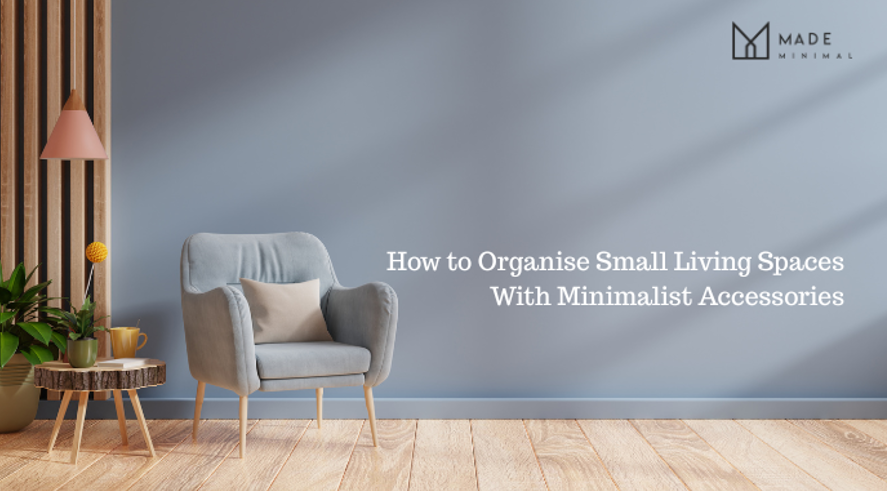
Living in a smaller home has its perks, but fitting your life into fewer rooms takes some thought. If you’ve ever looked around your place and felt like the walls were closing in, the issue probably isn’t how much you own. It’s that nothing has a proper spot.
The right minimalist home accessories can change that without adding bulk. A few well-chosen pieces that store, display, and organise all at once will do more for your layout than a house full of mismatched furniture.
We’re Made Minimal, and our team has spent years helping Australian homeowners get more out of every room. We know which products hold up in daily life, and which ones just collect dust. All of that went into this room-by-room rundown.
Why Minimalist Home Decor Works in Small Spaces
Minimalist home decor works in smaller rooms because every piece has to earn its place. When your shelves, surfaces, and walls aren’t competing for attention, the room feels open and easy to move through.
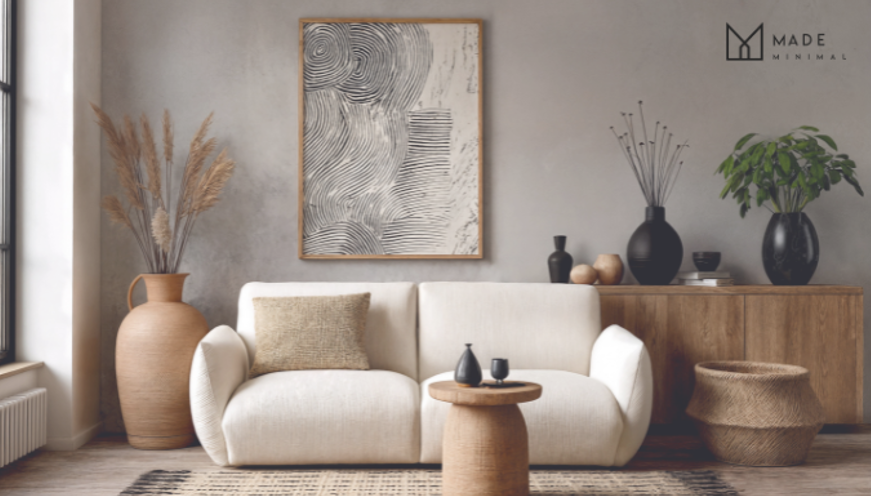
Frankly, that openness usually comes from what you remove, not what you buy. We’ve styled enough compact Brisbane apartments to see this play out firsthand. Pulling three or four items off a crowded shelf frees up more visual space than most new purchases ever will.
The practical side follows the same logic. Fewer belongings mean fewer things to clean around, reorganise, and eventually replace (your weekly routine will get lighter too).
Once your rooms only hold what you use and enjoy, the next step is figuring out where it all lives.
Storage Solutions That Keep Rooms Open
Most of us own twice as many things as we have room for, and it shows the moment you open a cupboard. Still, you don’t need a full renovation to sort that out. A handful of well-placed products can do the heavy lifting if you know where to put them.
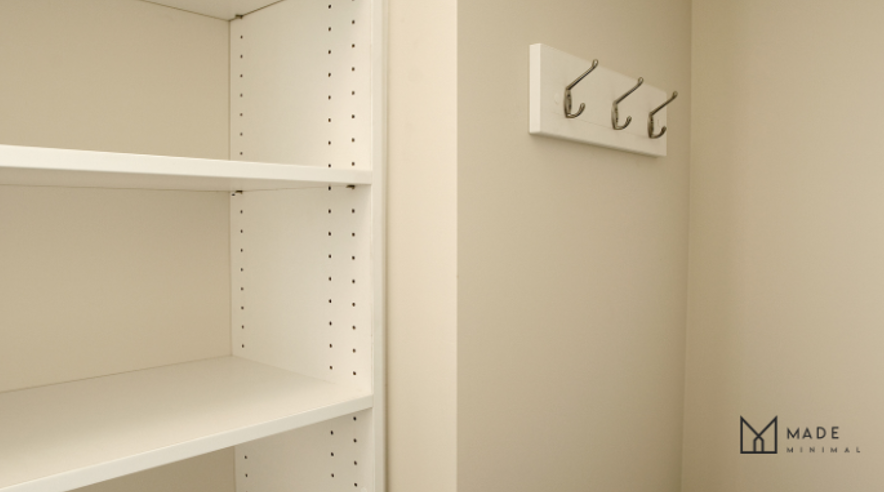
These are some of the fastest wins for small rooms:
- Hooks and Floating Shelves: Wall-mounted hooks and floating shelves let you store bags, hats, and daily grab items along your hallway, bathroom, or behind a door. That frees up valuable closet and cabinet space for things you don’t need to reach every day.
- Furniture With Built-In Storage: Ottomans, bed frames with drawers, and benches with lift-up lids hold blankets, shoes, and seasonal items inside pieces you already sit on or walk past (we’ve all done the “shove it in a drawer and deal with it later” thing). With these, everything has a designated place, so your morning routine runs smoother.
- Behind-the-Door Organisers: Racks and pocket organisers on the back of a bedroom, pantry, or office door keep smaller items like cleaning supplies, hair tools, and chargers off your benchtops. You barely notice they’re there, but your shelves and surfaces stay clear.
When your storage does its job quietly, the room stops feeling cramped and starts feeling like it has room to spare.
How a Shelving Unit Can Replace Bulky Furniture
Believe it or not, a single tall shelving unit can replace your bookcase, your display cabinet, and that side table you never really liked. It handles books, decor, and daily items in a fraction of the floor space those three pieces would need on their own.
Open shelves give you something a deep cabinet or dresser can’t, though. When everything sits in plain view, you tend to use it more and forget about it less. Compare that to a closed unit where things get pushed to the back and sit there for months (worth thinking about next time you spot a wide entertainment unit on sale).
Even the frame you pick will affect how your room feels. Lighter timber or metal creates an airy look, while a bulky, dark unit can shrink a small space visually. And the material your shelving and accessories are made of can shift the mood of a room just as quickly.
How Clean Lines and Natural Materials Shape Minimalist Design
You can tell a lot about a room by the shapes and textures in it.
For instance, in a 50-square-metre apartment, a shelf lined with mismatched decor items will make the walls feel like they’re closing in. Minimalist design takes the opposite approach: fewer pieces with cleaner forms that let the room do the talking.
Two things have the most visual impact in a compact space:
Why Clean Lines Calm a Room
Accessories and furniture with clean lines guide your eyes easily from one side of the room to the other. On the other hand, straight edges and simple shapes stop your gaze from getting stuck on cluttered surfaces, so even a full shelf reads as tidy.
Your layout ties into this as well. Where you place your furniture and decor in your how layout affects comfort own home often has more impact than how much you own (research links visual clutter to higher cortisol levels, even in rooms that look “fine” to most people).
Choosing Natural Materials That Add Warmth
If you’re worried your minimalist room will seem too bare, natural materials are your fix. They add texture and warmth that you can see and feel the moment you walk in.
Think timber shelves, rattan baskets, and ceramic vases. These pieces give your decor a softer, more grounded look without relying on bold colour or busy patterns.
Good airflow in tight spaces helps round things out on the comfort side, too. Pair your natural pieces with neutral walls and a well-ventilated layout, and your minimal home will feel fresh all year.
Minimalist Decor for a Small Kitchen With a Kitchen Island
Now, the kitchen is where this gets interesting.
The easiest way to organise a small kitchen is to clear your benchtops and only bring back what you reach for daily. You might keep one open jar for cooking utensils, a single plant on the windowsill, and a tray for your oil and salt. Your prep area stays clear, and the whole room feels less chaotic.
If you have the floor space for it, a slim kitchen island is worth considering.
We’ve tested them in kitchens as small as six square metres, and you can still cook comfortably with one in the middle. Pick one with shelves or cabinets underneath, and it becomes a home for your pots, cutting boards, and table linens too. You can even hang tea towels off the side or clip on a small spice rack.
With all of that in place, there’s one more spot in the house worth sorting out, especially if you have kids.
How to Manage Kids’ Artwork Without Losing Your Home Decor
If you have school-age kids, you probably know the feeling of fridge doors buried under layers of paintings and glitter projects. You don’t have to give up your home decor style to make room for their creativity, though. A bit of planning goes a long way.
Here’s how to keep the art visible and your rooms put-together at the same time:
- Use a Rotating Display Frame: Hang one or two clip frames on your wall and let your kids swap their artwork in and out whenever they create something new. Older prints can go in a flat box under the bed or on a closet shelf, so you always have a fresh rotation going. This gives your kids a sense of pride in what’s on display, and you get walls that still look like yours.
- Keep Supplies in Bins and Boxes: Rubber bands, markers, glue sticks, and paper will spread through every room if you let them. A bin or box for each type of supply on a bedroom shelf or in a hallway closet keeps everything contained. And honestly, once you nail a system for the art and the craft supplies, your weekend tidy-up drops from an hour to about ten minutes.
- Frame Your Favourites as Home Decor: Print and frame the pieces you and your kids love most, then hang them alongside your existing decor. A small gallery wall in the living area or a display shelf near the front door gives kids’ artwork a real home in your space.
Minimalism with kids takes some structure. But the payoff is a minimalist home where everyone’s stuff has a place and the creative side of family life still shows up on the walls.
See also: UK Business Energy in 2026: Key Trends Reshaping How Small Businesses Procure Power
Building a Minimalist Home One Accessory at a Time
You don’t need to redo every room in a weekend. Pick one surface or one corner that’s been bothering you, swap out what isn’t working, and see how it feels. That’s how most people start, and it’s usually enough to make you want to keep going.
Every tip in this guide works the same way. Small, focused changes that create a more functional minimalist home over time, not overnight. Minimalism doesn’t ask you to live with nothing. It just asks you to be more intentional about what stays.
If you’re ready to make your first swap, Made Minimal carries minimalist home accessories, decor, and storage for every room in the house. Have a look and see what fits your space.

 Indian Super League Football: Understanding Standings, Structure, and Season Tracking